



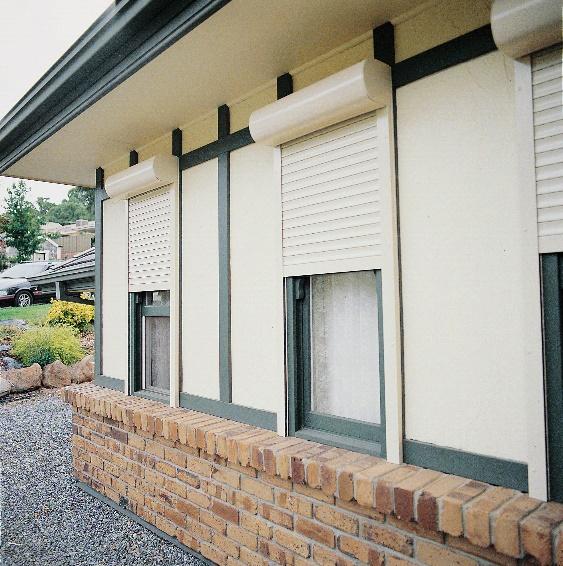
Security roller shutters can make a window or door more difficult to access, improve privacy, and provide an additional physical barrier when closed. However, they do not guarantee that a property cannot be broken into. Their effectiveness depends on the shutter’s construction, guide rails, locking arrangements, installation quality, condition, and how the system is used.
For Melbourne homeowners considering security roller shutters, the important question is not simply whether shutters look strong. It is whether the complete system is suitable for the opening and security concerns you want to address. Before buying, check the product specifications, ask what evidence supports its security claims, and understand what the installation and warranty cover.
This guide explains how security shutters may deter opportunistic entry, what affects their performance, and which questions to ask a supplier before requesting a quote.
Do security roller shutters actually prevent break-ins?
Security roller shutters can help deter opportunistic intruders and may make entry through a protected opening more difficult. However, the level of resistance varies between products and installations. Unless a particular system has relevant supporting test evidence, it is not appropriate to describe it as burglar-proof or guaranteed to prevent forced entry.
A closed external shutter can conceal the window behind it and add another barrier between the outside and the glass. This may discourage an opportunistic attempt or create an additional obstacle. The result depends on the shutter’s design, its installation, the locking mechanism, and the methods an intruder might use.
When comparing security roller shutters in Melbourne, distinguish between three separate benefits:
- Deterrence: The visible presence of a closed shutter may discourage an opportunistic attempt.
- Physical resistance: The complete system may resist particular forms of force, depending on its construction and tested performance.
- Privacy and environmental protection: Shutters can also provide privacy and help control light, weather exposure, and outside noise, depending on the product.
These benefits are not interchangeable. A shutter that provides privacy or insulation should not automatically be assumed to offer a particular level of forced-entry resistance.
What makes security roller shutters more resistant to forced entry?
The security performance of external security roller shutters depends on the complete assembly, not just the visible aluminium surface. The slats, guide rails, locking arrangements, fixings, and surrounding building structure all contribute to how the system behaves.
1. Aluminium roller shutter profiles
Ask your supplier to explain the profile used in the proposed shutter, including its construction, dimensions, and intended application. Aluminium roller shutter profiles can differ in design and performance. Also, material alone does not establish how resistant a finished shutter is to a forced-entry attempt.
Request the product specification for the exact model being quoted. If the supplier makes a claim about security performance, ask which test, assessment, or other documented evidence supports it.
2. Guide rails and slat engagement
The guide rails help retain and guide the shutter as it moves. How the slats engage with those rails, the dimensions of the components, and the way the rails are fixed to the building can affect the performance of the overall installation.
Ask how the proposed system is designed to remain engaged with its guides under the conditions for which it is intended. It’s advisable not to assume that a close-fitting appearance alone proves resistance to prying or other forms of force.
3. Locking mechanisms and operating controls
Locking arrangements and operating controls should be appropriate for the particular shutter system. Ask how the shutter is secured when closed, how the locking mechanism operates, and whether the controls have any limitations that matter to your household.
Also, remote-controlled security shutters may offer convenience, but remote operation is not proof of a higher security rating. Likewise, a motorised system is not automatically more resistant to forced entry than a manual one.
4. Installation quality and the building opening
Even a well-designed shutter can perform poorly if it is incorrectly fitted, inadequately secured or installed into an unsuitable substrate. Measurements, alignment, fixings and the condition of the surrounding opening should all be considered.
A professional roller shutter installation process should establish the opening’s dimensions and site requirements, confirm the proposed product and explain the installation scope. So, ask the installer how the system is secured to the building and what checks are completed before handover.
What security roller shutters cannot guarantee
Security shutters are one possible part of a wider home security plan. They do not guarantee that every entry point is protected, prevent every burglary method, or remove the need to secure doors and windows.
Performance claims should be specific to the product and evidence available. Also, be cautious of statements that a shutter is completely burglar-proof, impossible to force open, or guaranteed to stop all intruders, and ask for the basis of any such claim before relying on it.
Shutters also need to be used correctly and kept in working order. A damaged shutter, faulty lock, loose fixing or control problem may affect operation. If a system is difficult to close fully, arrange an assessment rather than assuming it provides its intended protection.
For additional security advice, Victoria Police’s guide to preventing home burglaries recommends securing doors, windows and other access points and considering measures such as alarms, cameras and sensor lighting. A shutter should complement sensible security practices rather than replace them.
What evidence should you request before buying?
Before purchasing security roller shutters for homes, ask the supplier for information that relates to the exact product and installation being proposed. General brochures can describe features, but a specific performance claim should be supported by appropriate documentation.
Ask for these documents and explanations
- Product specification: The model, slat profile, materials, locking arrangements and relevant operating details.
- Test reports or independent assessments: If resistance to forced entry is claimed, ask for the report, the issuing organisation, the tested configuration and the scope of the result.
- Applicable standards: Ask which standards, if any, apply to the particular shutter product and what evidence demonstrates compliance. Do not assume a standard for security screens automatically applies to roller shutters.
- Installation scope: Clarify measurements, fixing arrangements, the work included, and any site limitations.
- Warranty terms: Check coverage, exclusions, maintenance obligations, operating components, and the process for reporting faults.
- Operating instructions: Understand how to open, close, and secure the shutter, including any relevant manual override or power-failure procedure.
Make sure you do not accept a logo, general statement about Australian manufacturing, or a claim that a product is high quality as a substitute for evidence of a specific security performance level.
Security roller shutter assessment checklist
You may use this checklist when comparing suppliers or reviewing a quotation. A supplier should be able to explain the proposed system, its limitations, and the documentation available to support its claims.
- Identify the opening: Confirm which windows or doors need additional protection and why.
- Confirm the exact product: Record the shutter model, construction, and intended application.
- Check the security claim: Ask what the product is designed to do and whether independent test evidence is available.
- Review the whole assembly: Discuss the slats, guide rails, locks, fixings and surrounding structure.
- Clarify installation: Confirm the measuring process, installation scope and final operating checks.
- Compare manual and motorised options: Consider convenience, controls, backup operation and maintenance rather than assuming one is inherently more secure.
- Read the warranty: Check what is covered, the duration, exclusions, and responsibilities for care.
- Plan ongoing maintenance: Request the correct cleaning, inspection and fault-reporting instructions.
- Keep other entry points secure: Include doors, windows and accessible areas in your wider home security plan.
If a supplier cannot explain a material security claim or provide the supporting documentation it says exists, treat that as an unanswered question rather than assuming the claim has been proven.
Are motorised security roller shutters better than manual shutters?
Motorised security roller shutters can make routine operation easier, especially where several openings need to be covered. Manual shutters may suit some households and installations. Neither operating method alone establishes the system’s resistance to forced entry.
When comparing manual vs motorised roller shutters, consider the type of control, ease of operation, maintenance requirements and what happens if power or a control component fails. Ask whether the particular system includes a manual override or backup and how it should be used.
If you already have shutters, ask whether motorisation is compatible with their condition and construction. Retrofitting is not suitable for every existing system, so an inspection and product-specific assessment may be necessary.
What about insulation, noise and ongoing maintenance?
Roller shutter insulation and noise reduction may be useful additional considerations, but the result varies with the product, the opening, the installation and the surrounding building. So, do not assume that a security claim proves a particular thermal or acoustic performance level.
Ask the supplier which performance information is available for the proposed product and whether it applies to your intended installation. Treat energy-saving percentages as product-specific claims that require supporting evidence.
Security shutter maintenance also matters. Follow the manufacturer’s instructions for cleaning and operation, keep the shutter and its operating area clear, and arrange an inspection if you notice unusual noise, damage, inconsistent movement, or a locking fault. Avoid forcing a shutter that is jammed or appears damaged.
Also, before accepting a quote, make sure you understand the security shutter warranty and operating controls. Confirm the warranty period, what is covered, how service requests are handled, and whether particular maintenance tasks are required to retain coverage.
Choosing security roller shutters in Melbourne
For Melbourne homeowners, the best starting point is to identify the opening you want to protect and the outcome you need. Consider whether your main priority is deterrence, privacy, light control, weather protection, or a combination of these factors. Then compare products on their documented specifications, the installation proposed, and the support available after fitting.
Also, ask for a written quote that identifies the product and explains the scope of work, warranty, and any relevant limitations. This makes it easier to compare like with like rather than choosing on price alone.
Frequently asked questions
They can deter opportunistic intruders and add a physical barrier, but they cannot guarantee that a burglary will be prevented. The result depends on the product, installation, locking arrangements and circumstances.
They may be worthwhile if you want an additional barrier, privacy or light control. Compare the documented performance, installation scope, warranty and cost against your particular needs before deciding.
The product’s design, construction, locking arrangements and installation all matter. Ask the supplier for the exact specifications and any independent test evidence supporting its security claims.
Aluminium is a material, not a security rating. The profile, complete assembly, fixings and installation determine how a particular shutter performs.
Motorisation primarily changes how a shutter is operated. It does not automatically prove greater forced-entry resistance. Compare the security specification and locking arrangements of the actual products.
They may help reduce some outside noise, depending on the shutter, the opening and the installation. Ask for relevant acoustic performance evidence if noise reduction is a key reason for buying.
Follow the manufacturer’s cleaning and operating instructions, check for visible damage, and arrange service if movement, locking, or controls become unreliable.
Confirm the product specification, the security evidence available, installation scope, warranty, operating controls and maintenance requirements. Also, ask the supplier to explain any claim you cannot independently verify.
Make an informed decision about your home’s security
Security roller shutters can be a useful part of a broader home security plan, but the right choice depends on the opening, the system’s documented performance and the quality of the installation. Focus on verifiable specifications and clear answers rather than promises of complete protection.
Statewide Outdoor Blinds offers security roller shutters in Melbourne that include a five-year product and installation warranty. So, feel free to review the product information and discuss your requirements with the team.