



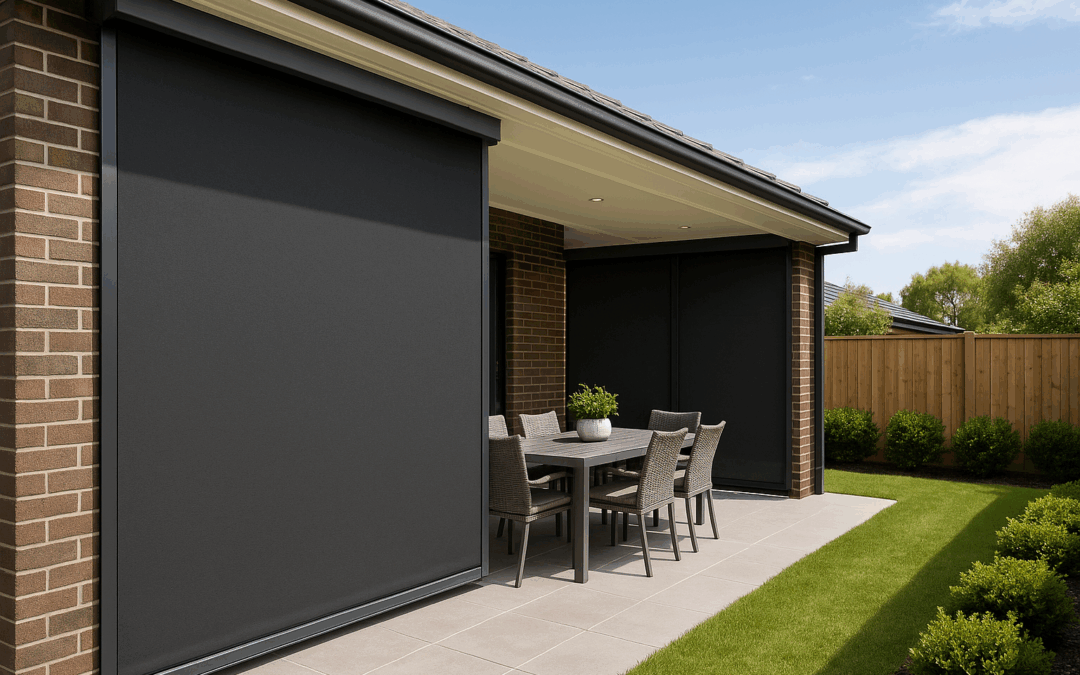
If you have ever sat on your alfresco on a blinding January afternoon — squinting into the sun, sipping a lukewarm coffee because the heat drove you inside — you already know exactly why outdoor blinds in Melbourne are not a luxury. They are practically a survival tool. Melbourne’s weather is famously unpredictable. Four seasons in one day is not a saying here; it is Tuesday. Your outdoor space deserves proper protection, and this guide covers everything you need to choose the right system for your home.
Why Outdoor Blinds Are a Smart Investment for Melbourne Homes
Melbourne homeowners are increasingly clever about outdoor living. Decks, pergolas, and alfresco dining areas have become true extensions of the home. However, without proper shading, these spaces sit empty for half the year. That is a lot of square metres going to waste.
The problem is real. Melbourne summers bring UV levels regularly exceeding 10 on the UV index scale, classified as extreme by the Australian Radiation Protection and Nuclear Safety Agency (ARPANSA). Direct sun exposure on an unshaded alfresco can make the surface temperature feel 10 to 15 degrees hotter than the ambient air temperature.
| ✔ Verified Fact According to the Australian Radiation Protection and Nuclear Safety Agency (ARPANSA), UV radiation in Melbourne regularly reaches the “Extreme” category (UV index 11+) during summer months, making shade structures a genuine health necessity, not just a comfort upgrade. |
Then there is winter. Melbourne’s southerly winds are cold and persistent. An open alfresco in July is essentially a wind tunnel. Adding quality outdoor blinds transforms that space into a usable sheltered zone for most of the year.
Beyond comfort, outdoor blinds add tangible property value. Real estate agents consistently report that well-finished outdoor entertainment areas increase buyer appeal. A properly enclosed alfresco is a selling point, not just a perk.
Energy efficiency is another genuine benefit. External shading reduces heat entering through glass doors and windows. Research by the Australian Government Your Home guide confirms that external shading is significantly more effective than internal blinds at reducing summer heat gain. Less solar load means a cooler home and lower cooling bills.
| Outdoor blinds do not just block the sun. They extend your living area, reduce your energy bill, protect your furniture, and add real value to your property. That is four wins from one product. |
The Best Types of Outdoor Blinds Available in Melbourne
Not all outdoor blinds are created equal. Choosing the wrong system for your space is one of the most common mistakes Melbourne homeowners make. Here is a straightforward breakdown of each system and where it works best.
Ziptrak Blinds
Ziptrak Blinds are the benchmark for modern alfresco blinds in Melbourne. Their spring-balanced, strap-free operation means you can raise or lower them with one hand at any height without ratchets or straps. The fabric locks into side channels, which prevents billowing in wind and gives a clean, seamless look from the outside.
Ziptrak suits almost every alfresco configuration. Furthermore, they are available in a wide range of fabrics, from transparent PVC to mesh and blockout options. If you want a system that looks premium, performs in Melbourne’s variable weather, and lasts the distance, Ziptrak consistently leads the field.
E-Zip Blinds
E-Zip Blinds take the zip-guided concept and apply it specifically to wider, more exposed spans. The system uses a motorised roller mechanism with a zipper-edge fabric that locks into aluminium side channels at both ends. This design eliminates fabric movement even in strong Melbourne southerlies.
E-Zip is popular for exposed balconies, rooftop terraces, and commercial settings where manual operation is impractical. The motor integration is smooth, quiet, and compatible with smart home systems. Additionally, E-Zip suits locations where a clean retracted profile is important, as the fabric rolls neatly into a discreet pelmet box.
Cafe Blinds Melbourne
Cafe Blinds are the workhorse of Melbourne alfresco areas. Clear PVC, tinted PVC, or mesh fabric hangs from a track or rope system along the perimeter of your outdoor space. They are a practical, cost-effective solution for homeowners who want weather protection without the complexity of a full track system.
However, cafe blinds do move in wind because they lack the zip edge of a guided system. They work best in semi-protected areas like covered patios, pergolas with roofing, or courtyard spaces with existing wind breaks. On the upside, they are easy to operate, maintain, and replace. Melbourne restaurants and cafes have used them for decades for good reason.
Slide Track Blinds
Slide Track Blinds are another premium, track-guided vertical option popular across Melbourne. Rather than using zippers, this clever Australian-designed system secures the fabric edge firmly inside aluminum side channels using a specialized welded spline. They roll up and down smoothly into a top tube or a discreet headbox, completely eliminating the need for ropes, straps, or buckles.Operating them is effortless; a manual spring-balanced mechanism allows you to pull them down with one hand and lock them into a central position. They can also be crank-operated or motorized for ultimate convenience. Because the fabric is locked tight into the side tracks, Slidetrack blinds provide an excellent, tight seal against Melbourne’s harsh southerly winds, rain, and pesky insects.
Because they roll up completely into a sleek top roll or pelmet, they keep your outdoor views unobstructed when open. They look architecturally clean, providing a minimalist aesthetic that beautifully suits contemporary Melbourne home designs.
ZipScreen Blinds
ZipScreen Blinds share the zip-guided track principle with Ziptrak but are engineered for larger, more structurally integrated applications. They are commonly specified by builders and architects during new-build or renovation projects where the blind integrates directly into the pergola or structure. ZipScreen suits alfresco designs where the blind needs to disappear fully into a recessed box when retracted.
Both ZipScreen and Ziptrak outperform unguided systems in Melbourne’s wind conditions. Your supplier will advise which system suits your specific structure and span requirements.
Choosing the Right Material for the Right Place
Fabric choice is where a lot of Melbourne homeowners get stuck. The good news is that the decision is simpler than it looks once you know what each material is designed to do.
The problem: picking a material that looks good in the showroom but fails outdoors within two summers. The solution: match material to exposure level, not just aesthetics.
| Material | Best For | UV Resistance | Waterproof | Visibility | Melbourne Use Case |
|---|---|---|---|---|---|
| Clear PVC | Rain/wind protection | Moderate | High | Full | Winter alfresco enclosures |
| Tinted PVC | Sun and glare reduction | High | High | Partial | North-facing patios |
| Mesh/Shade Fabric | Sun filtering, airflow | Very High | Low | Filtered | Summer shade, pool areas |
| Solution-Dyed Acrylic | Semi-exposed, aesthetic | Excellent | Moderate | None | Pergola side panels |
| Blockout Fabric | Privacy, full sun block | Excellent | Moderate | None | Street-facing blinds |
| Heavy PVC (700gsm+) | Coastal, high-wind exposure | High | Very High | Full | Exposed Melbourne outer suburbs |
| ✔ Verified Fact The Australian Government Your Home guide confirms external shading reduces summer solar heat gain by up to 90% compared to internal blinds, which only reduce heat gain by around 25%. Choosing the right outdoor blind material is therefore a meaningful energy-efficiency decision, not just an aesthetic one. |
For Melbourne winters, heavy-gauge clear PVC is the standout choice. It retains heat in the alfresco space, blocks wind, and still lets winter light through on overcast days. For summer, mesh or shade fabric keeps the space cool while maintaining airflow. Many Melbourne homeowners install a dual system: clear PVC for cooler months, shade fabric for summer.
How Much Do Outdoor Blinds Cost in Melbourne?
This is the question everyone wants answered upfront. Fair enough. The tricky part is that cost depends on several variables, so ballpark figures need context to be useful.
| System Type | Indicative Cost Per Drop | Full Alfresco Estimate | Notes |
|---|---|---|---|
| Cafe Blinds (basic) | $250 – $600 | $1,200 – $3,500 | PVC grade, span size |
| Ziptrak Blinds (manual) | $600 – $1,400 | $3,000 – $8,000 | Fabric, width, height |
| Ziptrak Blinds (motorised) | $900 – $1,800 | $4,500 – $12,000 | Motor brand, control type |
| E-Zip / ZipScreen | $1,000 – $2,200 | $5,000 – $15,000+ | Span, integration, fabric |
| Slide Track Blinds | $700 – $1,500 | $3,500 – $9,000 | Fabric type, width/height |
These figures are indicative. The actual cost for your Melbourne home depends on the width and height of each opening, the fabric chosen, whether motorisation is included, site access, and any structural preparation required. Always get a proper measure and quote from your supplier rather than relying on a generic online estimate.
| The cheapest option is rarely the cheapest in the long run. Low-grade PVC yellows and cracks. Poorly tensioned systems rattle in the first strong Melbourne southerly. Invest in quality upfront and the system pays for itself over a decade or more. |
Wind Resistance and Melbourne Weather Performance
Melbourne’s wind is not a polite breeze. Southerly busters arriving off Port Phillip Bay hit with genuine force, particularly in the outer western and southern suburbs. Wind performance is therefore the most important technical specification for any outdoor blind system installed in Melbourne.
The core problem: unguided blinds flap, tear, and make enough noise to drive you back inside. The solution: zip-guided systems that lock fabric into side channels under tension.
| ✔ Verified Fact According to the Bureau of Meteorology, Melbourne experiences frequent strong wind days with gusts exceeding 60 km/h, particularly during the September-to-November transition season and during summer southerly changes. Outdoor blind systems must be rated for these conditions. |
Track-guided systems like Ziptrak, E-Zip, and ZipScreen lock fabric into aluminium channels. This prevents billowing and the rattling that plagues rope-and-weighted cafe blind systems in exposed locations. For Melbourne properties on hills, near Port Phillip Bay, or in exposed outer suburbs, a guided system is not a luxury upgrade. It is the minimum viable standard.
Additionally, all quality outdoor blind manufacturers publish wind rating specifications. Ask your supplier for the wind load rating of any system you consider, and confirm it suits your specific location and installation height.
| Melbourne wind tip: If your alfresco faces south or southwest, budget for a zip-guided system from the outset. Cafe blinds on a southwest-facing exposed alfresco in Werribee or Williamstown will be a frustrating experience within a year of installation. |
Manual vs Motorised Outdoor Blinds in Melbourne Homes
This is a question that divides households more than pineapple on pizza. Both options work. However, each suits different situations.
Manual Outdoor Blinds
• Lower upfront cost
• No power supply required
• Simple to operate and service
• Ideal for smaller drops up to 3m
• Spring-balanced systems (Ziptrak) are genuinely effortless
• No technology dependency
Motorised Outdoor Blinds
• Effortless operation at any size
• Ideal for large drops or multiple blinds
• Integrates with smart home systems
• Wind sensors can auto-retract blinds
• Remote, app, or voice control options
• Reduces mechanical wear on fabric
For Melbourne homes with large alfresco areas spanning more than 4 metres, motorisation removes the physical effort entirely. Brands like Somfy offer Melbourne-compatible motorisation with wind and sun sensor integration. Smart home users can also integrate motorised outdoor blinds with Google Home or Amazon Alexa systems for voice control.
The honest advice: if your budget allows it, go motorised. You will use your blinds far more often when deploying them is as simple as pressing a button. Moreover, automated wind sensors protect your investment by retracting blinds before a strong gust can cause damage.
How to Choose the Right Outdoor Blinds for Your Melbourne Home
Decision fatigue is real. There are a lot of systems, fabrics, and options out there. So here is a simple framework to cut through the noise.
Step 1 — Identify your primary goal: Is it sun protection, wind shelter, rain coverage, privacy, or all four? This narrows your system and fabric options immediately.
Step 2 — Assess your exposure: North-facing alfrescos get the most summer sun. South-facing alfrescos get the most winter wind. East faces get morning sun. West faces
get brutal afternoon heat. Each orientation suggests a different priority.
Step 3 — Measure your spans: Width and height determine whether a single drop, multiple drops, or a slide track configuration makes structural sense.
Step 4 — Set your budget range: Be realistic. A quality guided system for a standard Melbourne alfresco starts around $3,000 to $5,000 fully installed. Budget accordingly before you start comparing options.
Step 5 — Choose manual or motorised: Consider how frequently you will use the blinds and the physical effort involved in operation.
Step 6 — Get three quotes: Pricing and quality vary between suppliers. Always compare on equivalent specifications, not just the bottom-line figure.
Step 7 — Check warranty terms carefully: Fabric, components, and installation warranties should all be documented in writing before you sign anything.
Still unsure? The team at Statewide Outdoor Blinds offers a free measure and quote for Melbourne homeowners. A site visit takes the guesswork out of the decision entirely.
What to Look for in a Melbourne Outdoor Blind Supplier
Melbourne has plenty of outdoor blind companies. Not all of them are created equal. Here is what genuinely matters when choosing who installs on your home.
• Local experience: A supplier who has installed hundreds of blinds across Melbourne suburbs understands local wind conditions, common structural configurations, and council requirements. This knowledge directly affects the quality of their recommendations.
• Product range: A good supplier offers multiple systems, not just one brand. This means they recommend based on your needs, not their inventory constraints.
• Transparent pricing: A reputable Australian outdoor blind company in Melbourne provides itemised quotes with no hidden installation fees.
• Written warranty: Both fabric and installation warranties should be documented clearly. Walk away from any supplier who offers verbal warranties only.
• References and reviews: Look for detailed Google reviews from Melbourne homeowners mentioning specific suburbs, specific products, and the installation experience.
• After-sales support: Outdoor blinds occasionally need adjustment, component replacement, or cleaning advice. Choose a supplier with genuine after-sales commitment.
Statewide Outdoor Blinds is based at 8 Loire Cl, Hoppers Crossing VIC 3029, and services Melbourne homeowners across all suburbs. They supply and install Ziptrak, E-Zip, ZipScreen, Cafe Blinds, Slide Track Blinds, Folding Arm Awnings, Window Awnings, Security Roller Shutters, and Plantation Shutters. Call them on 1300 559 604, available Monday through Sunday, 8am to 6pm.
Warranty, Installation, and Ongoing Support
Warranty is where the real quality test happens. Any outdoor blind company can promise a great product. The warranty tells you how much they back that promise with actual accountability.
Look for:
- Fabric warranty of at least 5 years against UV degradation and colour fade
- Mechanical/component warranty of at least 2 years on motors and hardware
- Installation warranty covering tensioning, alignment, and structural fixing
- Clear warranty claim process — who do you call, and how quickly do they respond?
Professional installation matters enormously for outdoor blinds. A poorly tensioned Ziptrak does not operate smoothly. A misaligned track allows wind to bypass the zip seal, defeating the entire purpose. Correct installation also ensures your system operates within its rated wind load specification.
Additionally, ask whether the supplier offers an annual adjustment service. Track-guided systems can need minor tensioning after the first season as the fabric settles. A proactive supplier includes this in the package rather than treating it as a chargeable callout.
Maintenance and Lifespan of Outdoor Blinds in Melbourne
The good news: quality outdoor blinds are low maintenance. The bad news: “low maintenance” still means “some maintenance.” Ignoring cleaning entirely shortens your blind’s lifespan significantly.
Here is what the maintenance routine actually looks like for Melbourne conditions:
• Monthly: Wipe down PVC panels with a damp cloth and mild detergent. Remove bird droppings and pollen promptly — both degrade PVC over time.
• Seasonally: Inspect tracks and channels for debris. Clear any grit that could score the fabric during operation. Check motor cables if motorised.
• Annually: Have a professional inspection of tensioning, track alignment, and motor calibration if applicable. Ask your installer whether this is included in your purchase.
• After extreme weather: Check for any fabric abrasion or track displacement after significant Melbourne storm events.
| ✔ Verified Fact UV-stabilised PVC used in quality Australian outdoor blinds maintains its structural integrity for 10 to 15 years under normal Melbourne outdoor exposure when correctly maintained. Solution-dyed acrylic fabric, as specified by the Australian Standards applicable to outdoor textiles, retains colour and UV resistance for a comparable period when cleaned regularly and protected from prolonged UV exposure in the retracted position. |
Melbourne’s environmental conditions — heavy UV in summer, persistent moisture and mould risk in winter — mean that the fabric you choose at purchase and the cleaning routine you follow directly determine whether your blinds look great at year 5 or are ready for replacement at year 7.
Common Buying Mistakes Melbourne Homeowners Make
1.Choosing price over quality
Budget blinds use low-grade PVC that yellows within two Melbourne summers. The system that costs $400 less today often costs $800 more in replacement and frustration within four years.
2.Ignoring wind exposure
Buying cafe blinds for a south-facing, exposed Melbourne alfresco is a recipe for noisy, flapping panels that you stop using by the second winter. Match the system to your actual wind exposure.
3.Skipping the site inspection
Online quotes without a site visit miss structural issues, span constraints, and mounting challenges that add cost later. Always insist on a proper measure before committing.
4.Overlooking material choice for the orientation
North-facing patios need UV-protective mesh. South-facing alfrescos need clear PVC for winter warmth. Choosing based on looks alone without considering orientation is a common and expensive mistake.
5.Not asking about council requirements
Most retractable outdoor blinds in Melbourne do not require a planning permit. However, heritage overlays, bushfire management overlays, and certain local council zones may apply. Always confirm with your local council before ordering if your property is in a special overlay zone.
6.Treating warranty as an afterthought
Checking the warranty after something goes wrong is too late. Read it before signing. Confirm it covers both fabric and installation. Understand the claims process before you need it.
Frequently Asked Questions About Outdoor Blinds in Melbourne
What material is best for outdoor blinds?
PVC and solution-dyed acrylic lead the field for Australian outdoor blinds. PVC suits wet, exposed areas and winter enclosures. Solution-dyed acrylic suits semi-exposed spaces with excellent UV and colour-fade resistance. Heavy-gauge PVC (700gsm or above) suits coastal and high-wind Melbourne locations.
What is better, Ziptrak or ZipScreen?
Both use zip-guided track systems but suit slightly different applications. Ziptrak offers spring-balanced, strap-free operation for most domestic alfrescos. ZipScreen suits larger spans and integrates directly into pergola or building structures during construction. A qualified Melbourne supplier can match the right system to your specific configuration.
What blinds look best from the outside of a Melbourne home?
Ziptrak and ZipScreen blinds offer the cleanest external profile. Their recessed track systems create a flush architectural finish that complements contemporary Melbourne home design. Slide track systems also present a clean profile when panels are stacked.
What are the drawbacks of outdoor blinds?
Outdoor blinds require periodic cleaning. Low-quality systems can discolour under Melbourne’s UV exposure. Poorly installed blinds may rattle in wind. Selecting commercial-grade materials and a reputable Melbourne supplier addresses most concerns before they arise.
What are the best outdoor blinds in Australia?
Ziptrak, ZipScreen, and E-Zip systems consistently rank as the best outdoor blinds in Australia for wind resistance, aesthetic quality, and commercial-grade durability. Each system has distinct strengths depending on the application.
What material holds up best outdoors in Melbourne?
Heavy-duty UV-stabilised PVC and solution-dyed acrylic are the top performers for Melbourne outdoor conditions. Both resist UV degradation, moisture, and mould growth when maintained correctly and stored properly during prolonged periods of non-use.
How do I choose outdoor blinds for my Melbourne home?
Start by identifying your primary need: sun control, wind shelter, rain coverage, or privacy. Then assess your alfresco orientation, span dimensions, budget, and aesthetic preference. A local Melbourne supplier site visit provides the most accurate product recommendation for your specific space.
How long do alfresco blinds usually last in Melbourne?
Quality alfresco blinds typically last 10 to 15 years with correct installation and regular maintenance. UV-stabilised PVC and solution-dyed acrylic perform best in Melbourne’s variable climate conditions.
Does Bunnings do made to measure outdoor blinds?
Yes, Bunnings offers a full Made-to-Measure Blinds service for both indoor and outdoor spaces. Through brands like Riva, they allow you to customize sizes, colors, and rail configurations. However, if you are looking for highly specialized, heavy-duty commercial track-guided brands like Ziptrak or ZipScreen with premium local structural integration, a dedicated specialist blind company remains the industry standard.
How much do outdoor blinds cost in Melbourne?
Outdoor blinds in Melbourne range from approximately $250 to $600 per drop for basic cafe blinds, up to $1,000 to $2,200+ per drop for motorised zip-guided systems. A full alfresco enclosure with a quality system typically ranges from $3,000 to $15,000 depending on size, system type, and fabric selection.
Do I need council approval for outdoor blinds in Melbourne?
In most Melbourne cases, retractable outdoor blinds do not require a planning permit. However, homes in heritage overlays, bushfire management zones, or specific local council overlay areas may require approval. Check with your local council or visit the Victorian Planning Authority website before proceeding if your property has an overlay.
What is the best outdoor blind material for Melbourne winters?
Heavy-duty clear PVC is the standout choice for Melbourne winters. It retains warmth in alfresco spaces, blocks southerly wind, provides rain protection, and maintains visibility and light penetration even on overcast winter days.
Can outdoor blinds handle Melbourne’s strong winds?
Yes, provided you choose a track-guided system. Ziptrak, ZipScreen, and E-Zip systems lock fabric into side channels under tension, preventing movement in Melbourne’s strong southerly winds. Unguided cafe blinds perform adequately in sheltered, semi-protected locations but are not suited for exposed, high-wind situations.
Are motorised outdoor blinds worth it for Melbourne homes?
Absolutely. Motorised outdoor blinds allow effortless control over large drops, integrate with smart home automation, and allow wind sensors to retract blinds automatically during strong gusts. For Melbourne homeowners with wide alfresco spans, motorisation is a practical upgrade that significantly improves daily usability.
Which Melbourne suburbs do Statewide Outdoor Blinds service?
Statewide Outdoor Blinds services all Melbourne suburbs and surrounds from their Hoppers Crossing base. Call 1300 559 604 or visit statewideoutdoorblinds.com to confirm your area and book a free measure and quote. They operate Monday through Sunday, 8am to 6pm.
How quickly can outdoor blinds be installed in Melbourne?
Lead times vary based on product type, fabric availability, and current demand. Most standard installations complete within 2 to 6 weeks from the initial measure and quote. Contact Statewide Outdoor Blinds on 1300 559 604 for current lead times and availability.
Are outdoor blinds waterproof?
PVC outdoor blinds are highly water-resistant to waterproof depending on fabric density and grade. Heavy-gauge PVC provides excellent rain protection for alfresco areas. Mesh and acrylic fabrics are water-resistant but not fully waterproof. If rain protection is your priority, specify a heavy-gauge PVC option from your supplier.
Can I install outdoor blinds myself in Melbourne?
Basic cafe blind systems can be DIY-installed. However, track-guided systems like Ziptrak, E-Zip, and ZipScreen require professional installation to ensure correct tensioning, wind resistance performance, and warranty validity. Incorrect installation also voids most manufacturer warranties.