



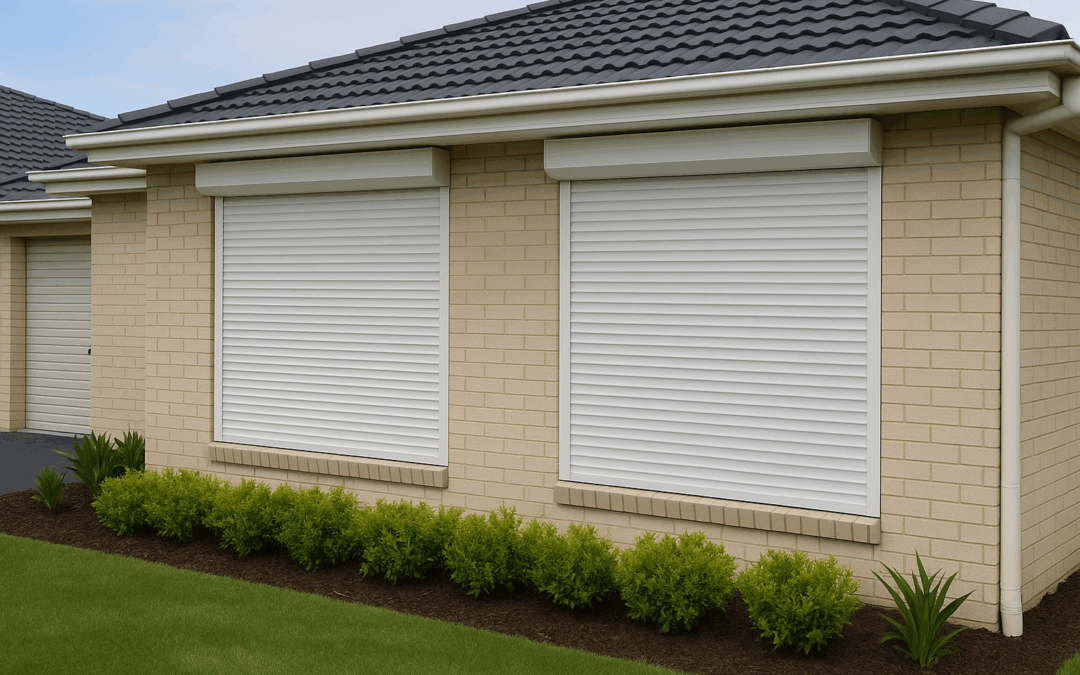
The most common question Melbourne homeowners ask when researching plantation shutters is straightforward: indoor or outdoor? The honest answer is that they serve fundamentally different purposes, and for many Melbourne homes, the right choice is actually both — used in complementary roles. Indoor plantation shutters manage light, privacy, and interior aesthetics. Outdoor plantation shutters and roller shutters handle weather protection, thermal performance, and security. Understanding which problem you’re solving determines which system belongs on your home.
Melbourne’s climate makes this decision particularly important. The city’s UV index regularly hits 11–12 in summer peak months — classified as “extreme” by the Australian Radiation Protection and Nuclear Safety Agency (ARPANSA) — while its autumn and winter deliver sustained rainfall and the kind of cold southerly winds that test any external window solution. Your choice of plantation shutters needs to reflect those realities, not just look good in a showroom.
This guide covers the full comparison: functional differences, material options, maintenance requirements, security performance, Melbourne climate suitability, and the care protocols that protect your investment for the long haul. Whether you’re renovating an inner-city terrace, fitting out a new build in Melbourne’s outer suburbs, or upgrading a commercial venue, the decision framework here applies directly to your situation.
Indoor vs Outdoor Plantation Shutters: Key Functional Differences
The word “plantation shutters” gets used loosely in Australia — sometimes referring to the classic interior louvred panels you’ll find in Victorian-era Melbourne terraces, and sometimes applied to exterior louvred systems or roller shutter products. Let’s define the terms clearly before comparing them.
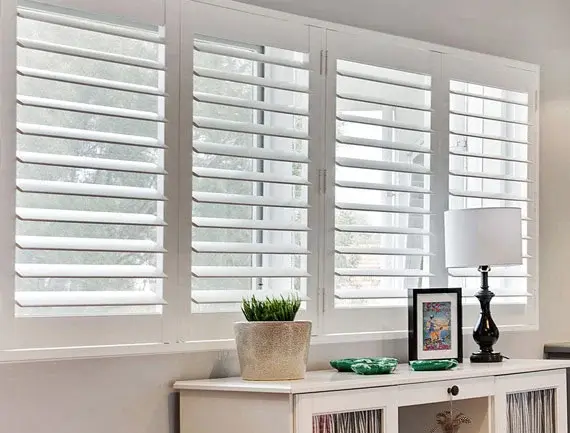
Indoor plantation shutters (also called interior window shutters) are fixed inside the window reveal or frame. They feature adjustable horizontal louvres — typically 63mm, 76mm, or 89mm wide — that tilt to control light and airflow. They’re a permanent interior fixture that adds architectural character while managing privacy and solar gain from inside the home.
Outdoor plantation shutters are mounted externally on the building facade. They may feature fixed or adjustable louvres, solid panel configurations, or integrated roller mechanisms depending on the system. Their primary function is external — blocking weather, managing external solar load before it enters the glass, providing physical security, and controlling privacy from the outside.
| Factor | Indoor Plantation Shutters | Outdoor Plantation / Roller Shutters |
|---|---|---|
| Primary Function | Light control, privacy, interior aesthetics | Weather protection, security, external solar management |
| Solar Heat Reduction | Moderate — reduces light but heat already passed through glass | High — blocks solar load before it reaches the glass |
| Security | Privacy barrier only — no physical security function | Substantial physical barrier; security-rated options available |
| Weather Exposure | Interior — protected from outdoor conditions | Full outdoor exposure — requires weather-rated materials |
| Maintenance Frequency | Light dusting weekly; damp wipe monthly | Rinse every 4–6 weeks; mechanism service every 6–12 months |
| Material Options | Timber, PVC, composite, ABS polymer | Powder-coated aluminium, marine composite, extruded aluminium |
| Installation Complexity | Moderate — frame fitting, hinge alignment, panel fitting | Higher — structural wall fixings, motor integration, weather sealing |
| Typical Lifespan | 15–20 years (timber); 10–15 years (PVC) | 15–25 years (aluminium with maintenance) |
| Acoustic Performance | Moderate — reduces interior noise reflection | Good to excellent — particularly with insulated roller systems |
| Thermal Insulation | Moderate — depends on louvre closure seal | High — insulated aluminium shutters significantly reduce heat transfer |
Table reflects standard product specifications across major Australian shutter manufacturers as of May 2026.
Material Choices for Melbourne Plantation Shutters — What Actually Lasts

Material selection is where most buyers make costly mistakes — choosing based on appearance rather than understanding how each material performs in Melbourne’s specific climate and within the interior or exterior application. Here’s an honest breakdown of every material category available in the Melbourne market.
Indoor Plantation Shutter Materials
Timber
Classic aesthetic. Works beautifully in heritage and period Melbourne homes. Requires annual sealing and is sensitive to humidity swings — particularly relevant in Melbourne’s seasonal transitions.
Premium LookPVC / Vinyl
Moisture-resistant and easy to clean. Ideal for bathrooms, laundries, and coastal Melbourne properties. Won’t warp with humidity changes. Lower aesthetic ceiling than timber but highly practical.
Low MaintenanceABS Polymer Composite
The dominant modern choice for Melbourne homes — combines timber-like aesthetics with PVC-like moisture resistance. Heavier louvres stay straighter over time. Excellent long-term value.
Best Value 2026Engineered / MDF Core
Budget-accessible but moisture-sensitive. Not suitable for high-humidity zones. Works in dry living areas where the aesthetic priority outweighs practical demands.
Budget TierOutdoor Shutter and Roller Shutter Materials
Powder-Coated Aluminium
The benchmark material for Melbourne outdoor shutters. Corrosion-resistant, UV-stable, and available in any Dulux or Colorbond colour. Minimal maintenance, exceptional lifespan. The right choice for the vast majority of Melbourne applications.
Industry StandardExtruded Aluminium (Insulated)
Aluminium profiles with foam-injected cores for thermal insulation. Significantly reduces heat transfer in summer and heat loss in winter. Used in premium roller shutter and louvre systems for Melbourne’s climate-conscious builds.
Thermal PerformanceMarine-Grade Composite
Engineered for coastal Melbourne suburbs — Williamstown, Elwood, Brighton. Salt-air resistant and non-corrosive. Heavier than aluminium but appropriate where salt-laden air is a genuine ongoing factor.
Coastal SpecificSteel (Security Applications)
Used in security-rated roller shutters where maximum forced-entry resistance is required. Heavier and requires corrosion protection in coastal areas. The choice for high-security commercial applications in Melbourne.
Maximum SecurityMelbourne Context: In Melbourne’s bayside suburbs — Brighton, Hampton, Elwood, Williamstown — salt air is a meaningful material selection factor even if you’re not directly on the waterfront. Standard powder-coat aluminium handles it well in most situations, but marine-grade composite or marine-rated powder coat specifications are worth considering for properties within 500 metres of Port Phillip Bay.
Security Shutters Melbourne: How Much Protection Do Plantation and Roller Shutters Actually Provide?
Security is one of the primary drivers behind Melbourne homeowners choosing external shutter systems — and it’s worth understanding what different products actually deliver versus what the marketing implies.
Indoor plantation shutters provide zero meaningful security. They create visual opacity when closed, which reduces visibility into the home from outside, but the louvred timber or PVC panels offer no physical resistance to forced entry. Treating indoor shutters as a security measure is a common and potentially costly misconception.
Security roller shutters are the genuine security-grade external window solution. When properly specified and installed, they provide a substantial physical barrier to forced entry. The Australian security window standards framework outlines performance classifications for security products, and quality roller shutters — particularly aluminium and steel variants — meet or exceed the burglar-resistance requirements outlined for residential security applications.
🔒 What Security Roller Shutters in Melbourne Can Deliver
- Forced entry resistance: Interlocked aluminium or steel slats require significant time and noise to breach — a meaningful deterrent in residential contexts.
- Smart home integration: Modern motorised security shutters integrate with home automation systems including Apple HomeKit, Google Home, and dedicated security platforms — allowing remote operation and status monitoring.
- Visual deterrence: Closed external roller shutters signal an occupied and secured property — a well-established deterrent factor in residential security research.
- Insurance recognition: Some Melbourne home insurers recognise security-rated external shutters as a risk-reduction measure — worth checking with your insurer directly.
- Dual function: Security shutters also provide blackout, acoustic insulation, and thermal benefits — unlike dedicated security grilles or bars which sacrifice all other performance attributes.
- Emergency egress compliance: Quality installations include manual override mechanisms for emergency egress — a requirement for compliant residential security shutter installations under the National Construction Code.
Note: Security performance varies significantly by product specification and installation quality. Always verify the security rating of any roller shutter product with your installer before purchase.
How to Clean and Maintain Indoor Plantation Shutters
Indoor plantation shutters are relatively low-maintenance compared to their outdoor counterparts, but they’re not zero-maintenance — and the type of material your shutters are made from directly determines the cleaning products and techniques that are safe to use.
Weekly and Monthly Indoor Shutter Maintenance Routine
Weekly Dust Removal
Use a clean, dry microfibre cloth or a feather duster on each louvre. Tilt the louvres to the closed position first — this makes the surface flat and much easier to wipe across in a single stroke without disturbing the tilt mechanism.
Monthly Wipe-Down
Dampen a microfibre cloth with warm water and a few drops of pH-neutral dish detergent. Wipe each louvre individually — top to bottom — then follow with a dry cloth to remove any moisture. Never saturate timber shutters.
Frame and Panel Clean
Wipe the frame and panel edges with a damp cloth during the monthly clean. Check hinges for smooth operation — a single drop of silicone lubricant on stiff hinge pins resolves the problem immediately.
Inspect the Tilt Rod
Test the tilt rod (the vertical bar connecting the louvres) monthly. It should move all louvres uniformly without resistance. Uneven louvre movement or a stiff rod signals a tilt mechanism that needs attention before it fails completely.
Annual Timber Sealing
Timber plantation shutters require annual application of a timber sealant or UV-protective oil to maintain the finish and prevent moisture absorption. This is critical in Melbourne’s humid winter months, which cause timber to expand and potentially crack if unprotected.
Check Window Reveals
Inspect the reveal and frame join annually for any signs of moisture ingress or condensation staining. This is particularly relevant in Melbourne’s older double-fronted homes where single-glazed windows create condensation on cold nights that runs down into the shutter frame.
What Damages Indoor Plantation Shutters: The most common causes of premature indoor shutter failure are soaking timber with excess water during cleaning, using bleach or solvent-based cleaners on painted surfaces, and failing to seal timber annually in Melbourne’s seasonal humidity swings. ABS composite and PVC shutters are far more forgiving of moisture during cleaning.
Cleaning and Maintaining Outdoor Plantation Shutters and Roller Shutters in Melbourne
Outdoor shutters and window roller shutters sit in Melbourne’s full weather environment year-round, which means their maintenance schedule needs to be purposefully structured around the climate — not left to the “whenever it looks dirty” approach that many homeowners default to.
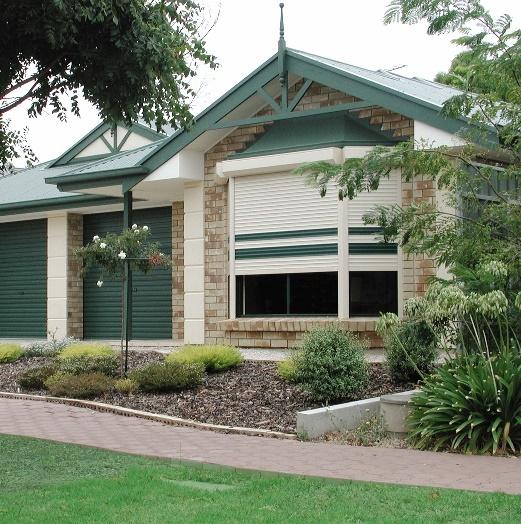
The Outdoor Roller Shutter Cleaning Process
- Open (extend) the shutter fully first. You can only clean what you can see — a partially closed roller shutter hides the lower slats inside the housing box. Open fully to expose the complete curtain surface.
- Dry brush debris. Use a soft-bristle brush to sweep away loose dirt, insect nests, spiderwebs, and leaf debris before water is introduced. This is especially important in Melbourne’s autumn when organic debris accumulates rapidly in shutter housings.
- Wash with mild detergent solution. Mix a pH-neutral detergent in warm water. Apply with a soft cloth or low-pressure sprayer. Work from top to bottom across the slat surface.
- Rinse thoroughly. Use a standard garden hose at normal pressure — never a pressure washer. Rinse until all detergent residue is clear. Dried soap attracts grime and can degrade powder coat over time if left on the surface.
- Clean the housing box. The box housing that contains the rolled-up shutter curtain accumulates significant dust and insect debris. Use a damp cloth and brush to clean the interior and exterior of the housing box quarterly.
- Lubricate the guide channels. Every 6 months, clean accumulated grit from the side guide channels and apply a silicone-based lubricant spray. Never use oil-based or WD-40-type lubricants — they attract dust and degrade the channel over time.
- Test operation and limits. Run the shutter through its full travel range after cleaning. Listen for grinding or resistance. For motorised systems, verify the upper and lower limit switches haven’t drifted.
Melbourne Bayside Homes: If your property is within 1–2km of Port Phillip Bay, salt deposit on aluminium extrusions is a real factor. In these locations, clean your roller shutter guide rails and housing box monthly — not quarterly — using fresh water to remove salt before it penetrates the powder coat and begins the corrosion process from underneath.
Mould Prevention on Melbourne Plantation and Roller Shutters
Mould on outdoor shutters is a Melbourne reality, not a theory — particularly in inner-city properties with reduced airflow, shaded south-facing facades, and the sustained humidity that Melbourne’s April through July period reliably delivers. The good news is that mould on aluminium-based shutters is generally surface-level and straightforward to treat. Timber applications require more active management.
🔲 Aluminium Roller Shutters — Mould Profile
- Aluminium itself is non-porous — mould grows on the surface layer of dust and organic matter, not in the material
- Surface mould wipes off readily with a white vinegar solution (1:3 with water)
- Regular cleaning every 6 weeks during Melbourne’s wet season prevents organic matter accumulation
- Inside the housing box is the highest-risk mould zone — clean quarterly
- Apply a mould inhibitor spray to housing box interior annually (autumn is ideal)
🌲 Timber Indoor Shutters — Mould Profile
- Timber is porous — mould can establish root structure within the material if moisture is persistent
- Early-stage mould on sealed timber: vinegar solution, soft brush, thorough drying
- Advanced mould on unsealed or poorly sealed timber may require professional treatment or panel replacement
- Annual sealing is the most effective mould prevention measure for timber shutters
- Ensure adequate room ventilation — Melbourne’s winter condensation is the primary moisture source for interior timber shutter mould
Seasonal Maintenance Calendar for Melbourne Plantation Shutters
Melbourne’s four distinct seasons each present different maintenance demands. A quarterly maintenance approach aligned with these seasonal changes protects both indoor and outdoor shutter systems far more effectively than an ad-hoc cleaning schedule.
Summer (Dec–Feb)
Outdoor: Rinse monthly. Apply UV protectant to powder-coat surfaces. Operate roller shutters to close during peak UV hours (10am–3pm) to reduce solar load and UV-driven fade.
Indoor: Check for any louvre warp from intense afternoon sun exposure in west-facing windows. Dust weekly.
Autumn (Mar–May)
Outdoor: Full clean in March. Apply mould inhibitor treatment in April. Clear leaf debris from housing boxes weekly — tannins stain and organic matter feeds mould.
Indoor: Apply annual timber sealant in April before Melbourne’s wet season begins. Check hinges and tilt mechanisms.
Winter (Jun–Aug)
Outdoor: Clean every 6 weeks on dry days. Lubricate roller shutter channels in July. Inspect housing box for mould monthly.
Indoor: Monitor for condensation around window reveals. Ensure timber shutters aren’t in persistent contact with moisture from condensation runoff.
Spring (Sep–Nov)
Outdoor: Post-winter deep clean in September. Rinse pollen deposits every 2–3 weeks. Inspect all fixings and mechanisms before the active summer season.
Indoor: Check tilt rods and hinge operation after winter. Dust and wipe down to remove any winter grime accumulation.
Climate Suitability: Which Shutter System Suits Melbourne’s Conditions?
Melbourne’s climate is legitimately challenging for window solutions. The Bureau of Meteorology classifies Melbourne as a temperate oceanic climate — but the lived experience is a city with extreme summer UV, cold and wet winters, consistent spring wind events, and the legendary four-seasons-in-one-day variability that makes material performance across a full temperature and humidity range genuinely important.
📊 Melbourne Climate Factors Relevant to Shutter Selection
- UV Index peaks (Dec–Feb): 11–12 “Extreme” — accelerates colour fade and material degradation in unprotected or low-quality products. UV-stable materials and powder-coat finishes are essential for outdoor applications.
- Annual rainfall (~650mm, concentrated Apr–Sep): Sustained wet periods demand moisture-resistant materials and rigorous drying protocols for any sealed or rolled shutter systems.
- Temperature range (−2°C to 43°C recorded extremes): Thermal expansion and contraction across this range affects all mechanical systems — louvre alignment, roller operation, and fixing integrity all need assessment under this range.
- Wind events (spring northerlies, summer southerlies): External shutters must be rated for Melbourne’s wind load conditions. Uncertified or improperly installed outdoor shutters present genuine safety risks in Melbourne’s regular wind events.
- Coastal salt influence: Properties within 2km of Port Phillip Bay face salt air exposure that demands marine-rated specifications or more frequent maintenance of standard aluminium finishes.
The practical implication: for outdoor applications in Melbourne, powder-coated aluminium is the baseline specification — not a premium option. Timber outdoor shutters are aesthetically appealing but demand a level of ongoing maintenance that most Melbourne homeowners underestimate. The ongoing sealing, painting, and inspection schedule for timber outdoor shutters in Melbourne’s climate is significant. Aluminium does the same job with a fraction of the ongoing care requirement.
For indoor applications, ABS composite polymer shutters have largely displaced both timber and PVC as the optimal balance point in Melbourne’s 2026 market — they deliver the timber aesthetic without timber’s sensitivity to Melbourne’s seasonal humidity swings, at a middle-ground maintenance requirement.
Thermal Insulation and Acoustic Performance: Indoor vs Outdoor Plantation Shutters
Thermal and acoustic performance is increasingly a primary purchasing driver for Melbourne homeowners — particularly those in inner-city areas with traffic noise, or those looking to reduce energy consumption year-round.
Thermal Performance Reality Check
Indoor plantation shutters do provide some thermal benefit — a closed louvre position reduces cold air convection from the glass surface in winter. However, the thermal performance is limited because the heat exchange has already happened at the glass. The sun’s energy has already passed through the glazing and entered the room.
External insulated roller shutters intercept solar energy before it reaches the glass — a fundamentally more effective thermal strategy. Research from the Australian Government’s Your Home design guide confirms that external shading reduces solar heat gain by up to 90% compared to internal shading solutions that reduce the same solar load by only 40–50%. In Melbourne’s summer conditions, this difference is directly measurable in cooling energy costs.
Acoustic Performance
For Melbourne homes near arterial roads, tram lines, or flight paths, acoustic performance matters significantly. Insulated aluminium roller shutters provide meaningful noise reduction — typically in the range of 15–25dB depending on slat profile and installation quality — making them a dual-function investment for both security and acoustic comfort. Indoor plantation shutters provide minimal acoustic benefit as they’re inside the glass line.
How to Choose Between Indoor and Outdoor Plantation Shutters for Your Melbourne Home
The decision framework is actually less complicated than most buyers expect once you’ve worked through the functional priorities. Here’s how to think about it based on the most common Melbourne homeowner scenarios:
Choose Indoor Plantation Shutters If:
- Your primary goal is light control and interior aesthetics
- You’re in a heritage Melbourne property where external shutters aren’t permitted by council or heritage overlay
- Privacy from passersby is the primary concern
- You want a permanent architectural interior feature
- The room is already adequately shaded externally by eaves or verandah
- Budget allocation favours a single high-quality interior solution
Choose Outdoor Shutters / Roller Shutters If:
- Security is a meaningful priority for your household
- West or north-facing windows are driving your summer cooling costs
- You’re in a Melbourne suburb with high traffic or tram-line noise
- You want blackout capability — particularly for bedrooms
- Your property is in a fire-affected zone requiring ember-resistant window protection
- Thermal performance and energy efficiency are primary goals
The Dual-Layer Approach: Many Melbourne homeowners who take the time to properly evaluate their needs arrive at the same conclusion — indoor plantation shutters for light management and aesthetics combined with external roller shutters for security, thermal performance, and weather control. This layered approach addresses each need with the right tool rather than compromising both requirements with a single product.
Installation: What Melbourne Homeowners Should Expect
Installation logistics often factor less than they should in the purchasing decision — then create the most friction once the project starts. Here’s an honest account of what each system involves.
Indoor plantation shutters are typically measured, manufactured, and installed within 4–8 weeks from the measure-and-quote appointment. The installation itself takes 2–6 hours depending on window count. It’s an interior-only project — no external scaffolding, no concrete drilling, no disruption to the external facade.
Outdoor roller shutters and louvre shutters involve structural external wall fixing, guide rail installation, housing box mounting, weather sealing, and — for motorised systems — electrical connection. Lead times from measure to installation typically run 4–8 weeks for standard aluminium roller shutters. Installation day is generally a half to full day per elevation depending on window count.
Heritage and council considerations in Melbourne: Melbourne’s heritage overlay zones — covering significant portions of inner suburbs including Carlton, Fitzroy, Collingwood, South Melbourne, and Hawthorn — may restrict or prohibit visible changes to building facades. External roller shutters or louvre shutters on heritage-listed properties in these zones typically require a planning permit. Your installer should be familiar with the Melbourne City Council and inner-suburban council heritage overlay requirements, and a compliant installation will incorporate heritage-sensitive colour and profile specifications. Always confirm heritage overlay status before proceeding with an external shutter project in inner Melbourne.
Warranty Coverage and Long-Term Investment Value
Warranty terms in the Australian shutter and blinds industry vary significantly by manufacturer and product tier. Here’s what to look for when comparing products and what maintenance obligations typically apply.
📋 Typical Australian Shutter Warranty Terms (May 2026)
- Indoor timber shutters: 2–5 years on mechanism; finish warranty typically 1–2 years. Timber warranties are commonly voided by moisture damage, which underscores the importance of annual sealing.
- Indoor PVC and ABS composite shutters: 5–10 years on mechanism and material. More robust warranty terms reflect the lower moisture sensitivity of these materials.
- Powder-coated aluminium roller shutters: 5–10 years on mechanism; powder-coat finish warranty typically 5–7 years against peeling and corrosion under normal conditions. Excludes salt damage in unmaintained coastal applications.
- Motorised systems: Motor warranty is typically separate (3–5 years) from the shutter curtain warranty. Remote control and smart home integration components carry their own manufacturer warranty.
- What voids warranty: DIY installation of professional-grade systems, modification without manufacturer approval, use of non-approved cleaning products (particularly solvent-based or bleach), and failure to follow the prescribed maintenance schedule.
The long-term value equation for Melbourne homeowners consistently favours quality aluminium roller shutters for external applications and ABS composite for interior applications — both deliver the best warranty terms, the lowest ongoing maintenance cost, and the longest projected service life in Melbourne’s specific climate conditions.